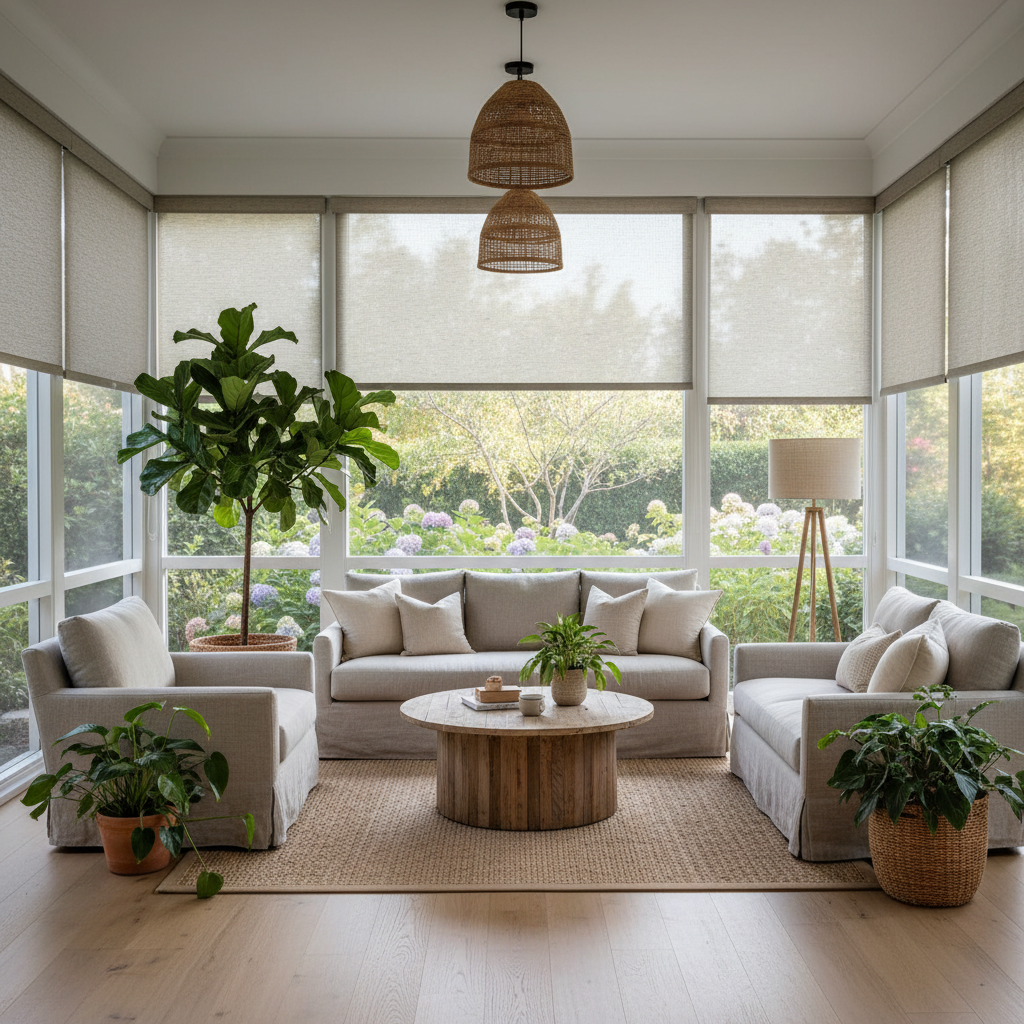
Potomac Historic Homes: Blending Modern Efficiency with Classic Window Treatments
Executive Summary (TL;DR)
For Potomac, MD's discerning homeowners renovating historic properties, selecting the right window treatments is paramount to preserving architectural authenticity while significantly enhancing energy efficiency and livability. This guide details how to leverage advanced window treatment technologies to achieve superior thermal performance and light control without compromising classic aesthetics, ensuring your investment elevates both comfort and property value.
Local Context
Potomac, MD, is currently experiencing a vibrant surge in luxury home renovations, particularly within its historic enclaves. Homeowners in areas like Potomac Village and along the River Road corridor are keenly focused on upgrading properties, often Colonial Revival or Federal-style homes, to meet contemporary standards of comfort and efficiency while preserving their inherent charm. This trend is not unique to Potomac; we see similar demands in McLean, Great Falls, and Chevy Chase, where historic architecture meets a desire for modern amenities. As spring ushers in renewed interest in home improvement, the challenge lies in integrating solutions that respect the past but perform for the future. For instance, addressing the thermal performance of original single-pane windows in a historic Federal rowhouse in Georgetown or a Colonial in Old Town Alexandria requires a nuanced approach to window treatments, one that Shore Shades & Finishes is uniquely positioned to provide, serving the entire DC Metro area.
Technical Deep Dive
When we discuss window treatments for historic homes, we're not just talking about aesthetics; we're delving into building science. The primary goals are often to improve thermal insulation, manage solar heat gain, and control natural light, all while maintaining the architectural integrity of the window opening. This is where terms like R-value, U-factor, and Solar Heat Gain Coefficient (SHGC) become critical.
R-value is a measure of thermal resistance; the higher the R-value, the better the insulation. Traditional single-pane windows, common in historic Potomac homes, have an R-value of approximately 1. Adding a high-performance window treatment can dramatically increase this. For example, a well-sealed cellular shade can add an R-value of 3 to 5, effectively doubling or tripling the window's insulating capacity. This directly impacts your home's U-factor, which is the rate of heat transfer through a window assembly; a lower U-factor indicates better insulation and less heat loss in winter or heat gain in summer.
Solar Heat Gain Coefficient (SHGC) measures how much solar radiation passes through a window and becomes heat inside your home. An SHGC of 0 means no solar heat passes through, while 1 means all solar heat passes through. In Potomac's hot, humid summers, a low SHGC is desirable to reduce cooling loads. Certain window treatments, like solar shades or those with reflective backings, are engineered to block a significant portion of solar heat, lowering the SHGC and preventing your HVAC system from working overtime. Conversely, in winter, some homeowners might desire higher SHGC to benefit from passive solar heating, which can be achieved by fully opening treatments during sunny days.
Another critical consideration is light control and UV protection. Historic fabrics, artwork, and furnishings are highly susceptible to fading from ultraviolet (UV) radiation. Window treatments with high UV blockage, even sheer options, can protect these valuable assets without sacrificing natural light. The precision of an inside-mount installation, where the treatment fits snugly within the window frame, is crucial for minimizing light gap and maximizing thermal performance and privacy, especially in homes with deep window sills. This also impacts the stack-back, or how much space the treatment takes when fully open, which is a key aesthetic and functional consideration in historic window openings that may have limited wall space.
For luxury renovations, integrating motorized window treatments is increasingly popular. These systems, often controlled via smart home platforms, allow for precise scheduling and remote operation, optimizing energy efficiency by adjusting treatments based on time of day, sun angle, or even indoor temperature. Imagine your plantation shutters automatically tilting to block harsh afternoon sun in your Georgetown living room, or your shades lowering to provide privacy in your Arlington condominium as dusk settles.
Product Comparison Table
| Treatment Type | Insulation Rating (R-value) | Solar Heat Gain Coefficient (SHGC) | Privacy Level | Best For |
|---|---|---|---|---|
| Cellular Shades | 3.5 - 5.0 | 0.20 - 0.40 | High (opaque) to Medium (light filtering) | Maximizing energy efficiency, modern aesthetics, quiet operation, wide color range. |
| Wood Plantation Shutters | 2.5 - 3.5 | 0.30 - 0.50 | High (closed) to Adjustable (louvers open) | Classic aesthetic, durability, light control, architectural integration, increase property value. |
| Woven Wood Shades | 1.5 - 2.5 | 0.40 - 0.60 | Medium (filtered view) to High (with liner) | Natural texture, organic feel, complements traditional and transitional decor, good for light diffusion. |
Pro-Tip Sidebar
Pro-Tip: In the DC Metro area, particularly in historic homes in Potomac or Old Town Alexandria, managing humidity is as important as temperature. Wood window treatments, such as plantation shutters, should be made from kiln-dried hardwood to prevent warping. For high-humidity areas like bathrooms or kitchens, consider composite or faux wood options that offer the same aesthetic without the moisture concerns. This attention to material science ensures longevity and performance in our region's distinct climate.
Hyper-Local FAQ
How can I improve energy efficiency in my Potomac historic home without replacing original windows?
For historic homes in Potomac (and similar areas like Chevy Chase or McLean) where preserving original windows is crucial for architectural integrity, high-performance window treatments are your best defense against energy loss. Cellular shades, with their unique honeycomb structure, create insulating air pockets that significantly increase your window's R-value and lower its U-factor. When properly installed as an inside-mount, they minimize light gap and create a tight seal, reducing drafts and heat transfer. Another excellent option is custom plantation shutters, which, when closed, provide a substantial thermal barrier. For optimal results, consider treatments with low SHGC ratings to reduce solar heat gain during our hot, humid summers, particularly on south and west-facing windows. Shore Shades & Finishes specializes in these custom solutions, ensuring a perfect fit and maximum performance for your unique historic windows.
What are the best window treatment options for maintaining the traditional aesthetic of a Federal-style home in Georgetown while offering modern privacy and light control?
For a Federal-style home in Georgetown, or a Colonial in Old Town Alexandria, the key is to select treatments that complement the period architecture while offering contemporary functionality. Custom plantation shutters are an iconic choice, providing timeless elegance, precise light control through adjustable louvers, and excellent privacy. They also offer a strong R-value, contributing to energy efficiency. Another superb option is natural woven wood shades, which introduce organic texture and warmth, diffusing light beautifully. When paired with an opaque liner, they offer complete privacy. For a more understated look, Roman shades in classic fabrics can be tailored to fit the sophisticated aesthetic. All these options can be customized for an inside-mount fit to preserve the window's original trim and minimize stack-back when open, ensuring a clean, integrated look. We can help you find the perfect balance of form and function for your historic property near me.
Can motorized window treatments be integrated into a historic renovation in Arlington or Reston without looking out of place?
Absolutely. Modern motorized window treatments are designed to be discreet and seamlessly integrate into any architectural style, including historic renovations in Arlington or Reston. The motorization components are typically hidden within the headrail of the shades or blinds, or integrated into the frame of plantation shutters. This means the aesthetic of the treatment itself remains true to the historic character of your home, while offering the convenience of remote control, smart home integration, and automated scheduling. Imagine your custom blinds in a Mid-Century Modern home in Reston or your shades in a renovated Colonial in Arlington effortlessly adjusting to optimize natural light and privacy throughout the day. This not only enhances livability but also contributes to energy efficiency by allowing precise management of solar heat gain and insulation, all without visible wires or bulky controls. Shore Shades & Finishes provides expert installation of these sophisticated systems throughout the DC Metro area, including near me in Potomac, Bethesda, and Tysons, ensuring they blend seamlessly with your home's design. For a free consultation on integrating these solutions, contact us at (301) 923-4477.
Explore More from Shore Shades
Ready to Transform Your Windows?
Schedule a free in-home design consultation with Shore Shades & Finishes. Call us at (301) 923-4477 or book online.
Get Your Free ConsultationFeatured Articles
How to Choose the Right Window Treatments for Your Home
A comprehensive guide to selecting the perfect blinds, shades, or shutters for every room.
Energy Efficient Window Treatments: Save Money and Stay Comfortable
Discover how the right window treatments can reduce your energy bills year-round.
Child Safe Window Treatments: A Parent's Guide
Essential safety tips and cordless options to protect your family.